


Digital Transformation Roadmap: From Idea to Stable Operations
Digital transformation isn’t simply buying a new system or launching an app. True digital transformation is about rebuilding how an organization operates using technology, data, and automation—so processes become faster, decisions more accurate, and service better—supported by reliable operational stability.

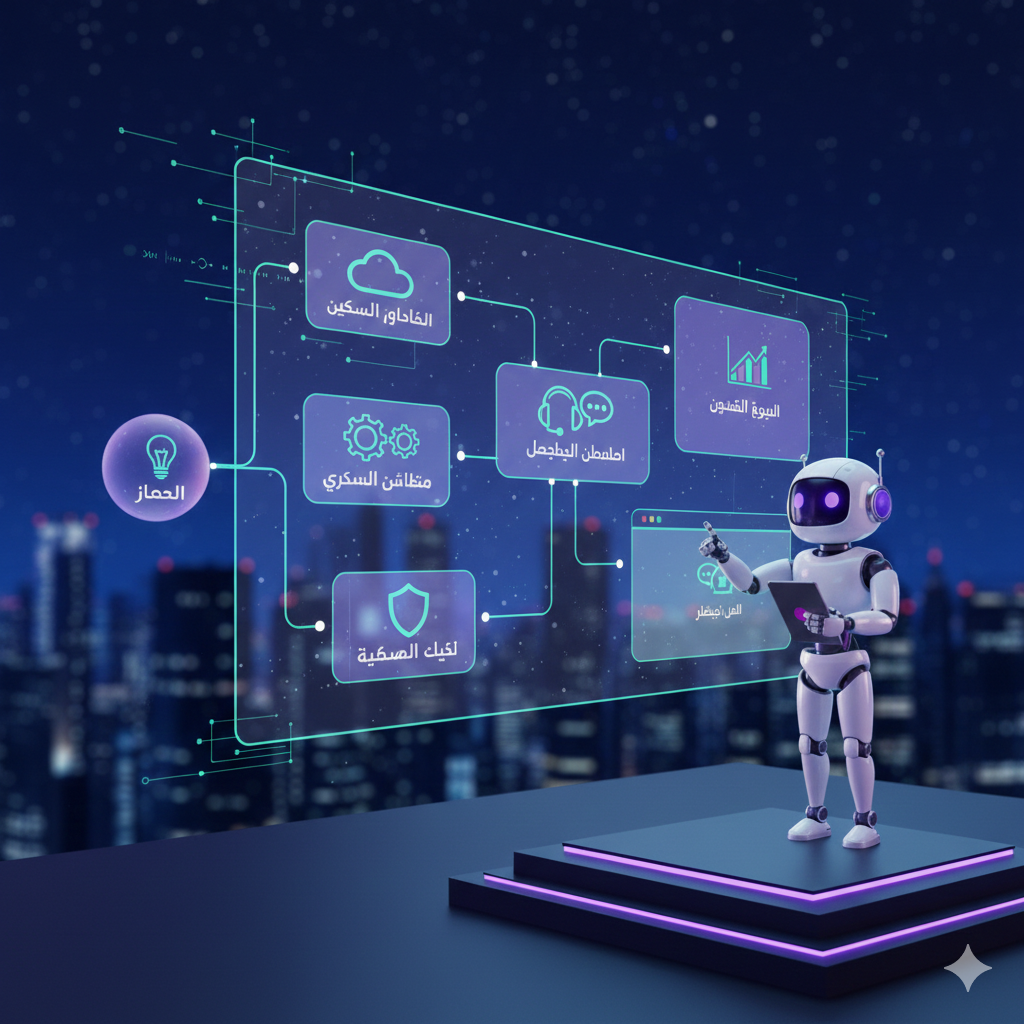
This is a simplified roadmap to help you build an actionable digital transformation plan that starts with an idea and ends with stable, sustainable operations, with a focus on: process analysis, system integration, governance, and performance indicators.
1) Define the goal clearly: Why are we transforming digitally?
The first step is not choosing technology—it’s defining a clear business outcome, such as:
Reducing service delivery time by 30%
Increasing customer satisfaction
Reducing operational costs
Reducing manual errors
Increasing scalability and enabling expansion to new branches/regions
Practical rule:
Set a measurable goal and define how you will measure success from day one.
2) Analyze the current state: Where are we now?
Before starting any project, you need an accurate view of the current reality:
How do processes run today, and who owns them?
Where are the bottlenecks? Where do errors recur?
What systems exist, and do they communicate with each other?
What data is available, and is it reliable?
What regulatory and security constraints apply?
A useful tool here is mapping processes As-Is and then defining the target To-Be.
3) Choose the transformation scope: Don’t start with everything
Starting with a massive, all-in-one project increases risk and delays results. Better approach:
Select 2–3 processes with clear and fast impact
Implement them as a pilot, then scale
Good starting scope examples:
Customer service journey (Request → Process → Close → Evaluate)
HR cycle (Hiring/Attendance/Payroll)
Procurement & inventory cycle
Operations & maintenance and ticket management
4) Design the target solution: Technology should serve the process
After defining processes, technology comes next. Ask: what do we actually need?
Service apps/portals
ERP or business systems
CRM for customer service and sales
Process automation platform (Workflow / RPA)
Business intelligence & analytics (BI)
Integration interfaces (APIs) and system connectivity
Most important: don’t let the system dictate the process—let the process guide system selection.
5) System integration: The heart of digital transformation
Many transformation failures happen due to disconnected “technology islands”:
A system here, an app there, and each department working alone.
Integration must be a core part of the plan:
Unify master data sources
Design clear APIs
Use webhooks for real-time events
Build one unified dashboard instead of multiple manual reports
Goal: one data journey, instead of duplicate entries and fragmentation.
6) Governance: Who decides, approves, and reviews?
Digital transformation is as much a management initiative as it is a technical one. You need clear governance:
Executive sponsor (Sponsor)
Transformation program manager / PMO
Process owner for each process
Technical team for implementation and integration
Change & release management policy
Risk management
Governance protects the project from chaos, conflicting decisions, and uncontrolled scope changes.
7) KPIs: Measure success without debate
You can’t manage what you can’t measure.
Define KPIs before and after implementation, such as:
Response time and request completion time
Number of operational errors
Procedure compliance rate
Cost per process
Customer satisfaction (CSAT/NPS)
Automation rate (how many steps became automated)
Important practice: build a single dashboard for leadership instead of scattered reports.
8) Phased delivery: Fast releases + continuous improvement
The most successful approach is phased implementation:
Phase 1: MVP (core functions)
Phase 2: Expand processes and integrations
Phase 3: Improve UX and deepen automation
Phase 4: BI and AI where needed
Phased delivery gives early results, reduces risk, and allows adjustments based on real-world feedback.
9) Stable operations: Post-launch is the real success
Launch isn’t the finish line. Stable operations require:
Ongoing performance monitoring and metrics
Technical support and ticket management (SLA)
Documentation and runbooks
Staff training and process updates
Backup and disaster recovery plan
Information security and granular access controls
Golden rule:
Any system without operation, support, and governance will gradually fall back into manual work.
Summary
A successful digital transformation roadmap is built on:
A measurable goal
Realistic process analysis
Gradual scope
Strong integration
Governance to prevent chaos
KPIs to measure outcomes
Phased implementation
Stable operations and support
How Aptiun helps
At Aptiun, we deliver digital transformation services from planning to stable operations:
Process analysis and an executable transformation roadmap
System selection and integration building
Workflow automation connected to data
KPI dashboards and measurement frameworks
Continuous operation, support, and development under an SLA
Share this post:
Related Posts
In 2026, “building a website” no longer means creating beautiful pages only. Today, companies need p...

AI is no longer a luxury or an experimental project limited to large enterprises. In 2026, it can be...

Learn how to create responsive user interfaces quickly and efficiently using the utility-first CSS f...

